

Square Payroll: Scaling compliant pay for growing teams
Team Compensation
▸
Contractor Payments
▸
Off-Cycle Payroll
▸
Multi-State Payroll
▸
Upmarket Scaling
▸
Pay schedule
▸
Team Compensation ▸ Contractor Payments ▸ Off-Cycle Payroll ▸ Multi-State Payroll ▸ Upmarket Scaling ▸ Pay schedule ▸
Overview
I led the end-to-end redesign of Square Payroll’s setup and core payroll experience, enabling faster first runs, clearer compliance, and better scale for growing teams. The work spanned ~12 months across two parallel initiatives.
My role
Improved scale & performance for growing sellers managing large teams.
Led frontend modernization (Ember → React) and aligned patterns to the evolving design system.
Operationalized regulatory complexity in close partnership with tax, legal, product, and engineering.
Owned end-to-end redesign of setup, dashboard, and core compensation flows (employees, contractors, off-cycle).
Running payroll is high stakes.
Sellers need to run payroll quickly and with confidence. But complex tax setup, scaling limitations for larger teams, and unclear blockers often slowed them down.

Speed vs. compliance
Sellers want to submit payroll and pay their team immediately.
The system must validate tax setup, classifications, and multi-state requirements.
Too many requirements slow activation; too few create compliance risk.

Flexibility vs. scale
Small businesses need a simple, lightweight flow.
Growing sellers manage multiple locations, large teams, and years of payroll data.
The system struggled to handle higher data volume without slowing down.

Proactive alerts vs. submission friction
When sellers run payroll, they want certainty.
Are the amounts correct?
Is the pay date accurate?
Are taxes handled?
How we resolved these tensions
To address these tensions, I redesigned three core parts of the system: compliance during setup, scalability across seller sizes, and how blockers were surfaced before payday
Action center & proactive alert framework
We introduced a structured alert system that:
Surfaced blockers before submission
Highlighted upcoming tax deadlines
Clarified payroll status and due dates
This reduced surprise failures at the moment of payroll submission.
Phased compliance during setup
Instead of collecting all tax information upfront, I separated requirements into:
Required to run payroll
Required to file taxes
This allowed sellers to reach first payroll faster while still protecting downstream compliance.
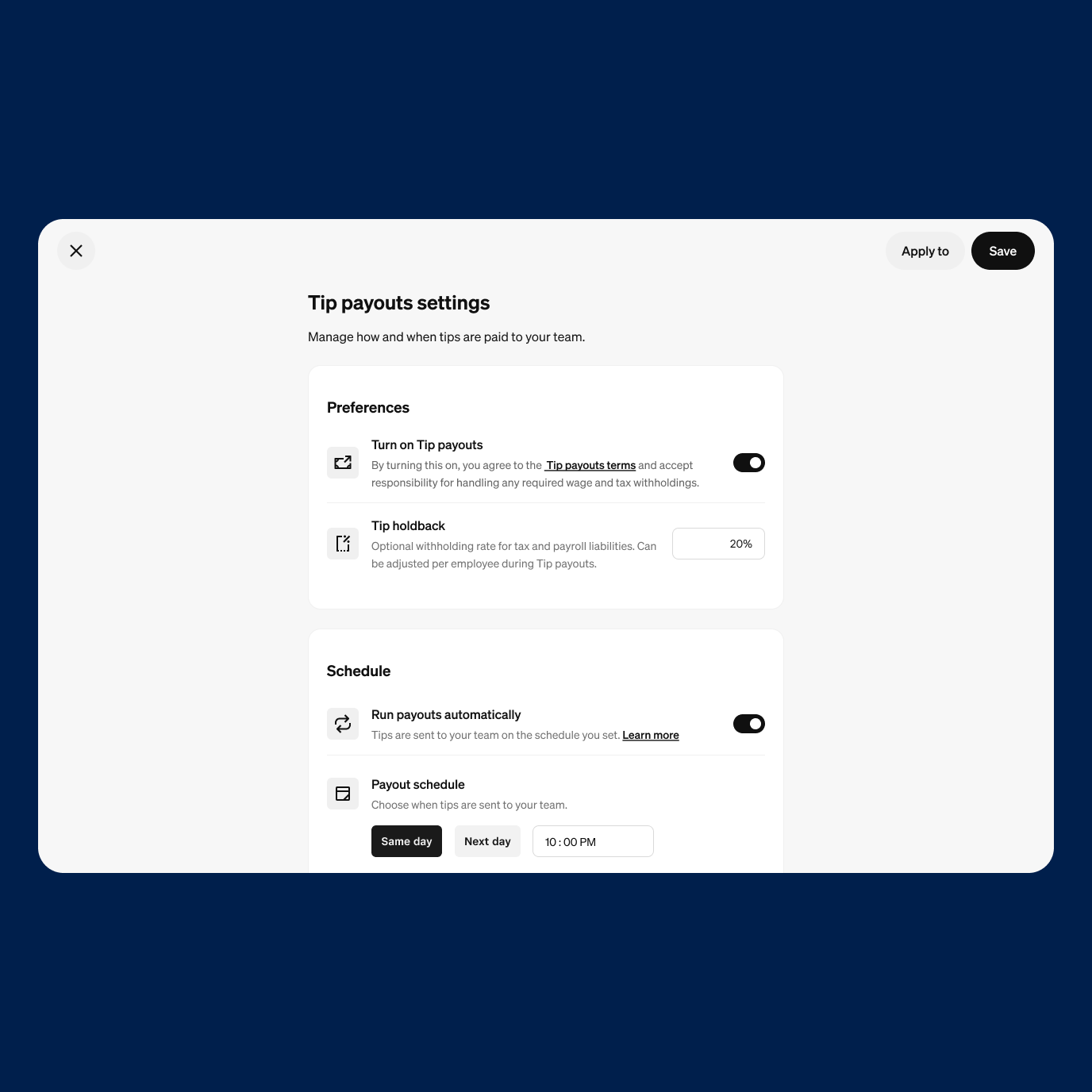

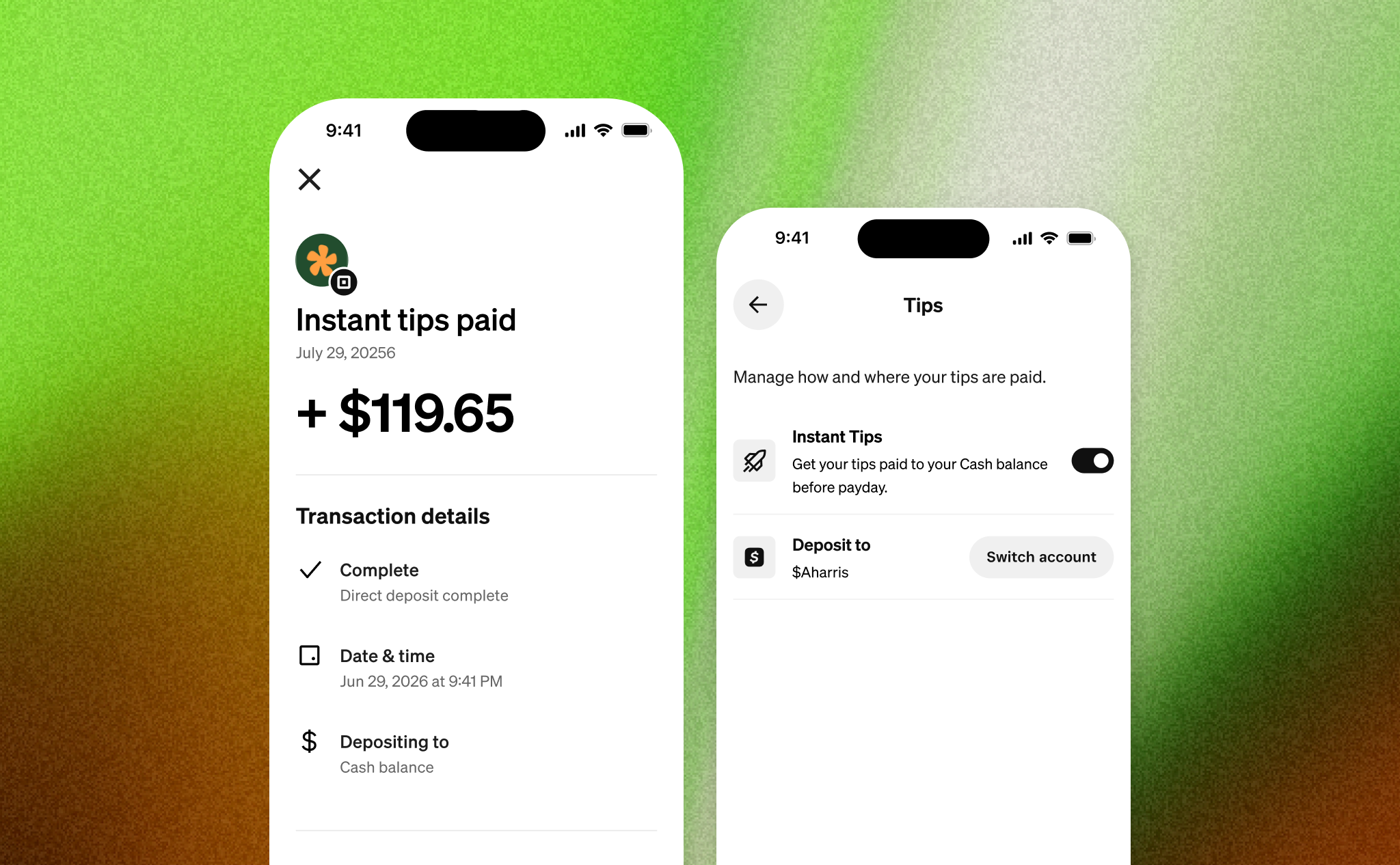
Scale-flexible interaction patterns
I redesigned the system to work for both:
A 3-person business
A multi-location seller with 100+ employees
The experience remained straightforward for small teams, while supporting larger data sets and higher operational volume.
Outcomes
100+ sellers onboarded in closed beta
~$1M in early gross tip volume processed
Manual workflows replaced with automated daily distribution
Strengthened Square ↔ Cash App ecosystem integration